
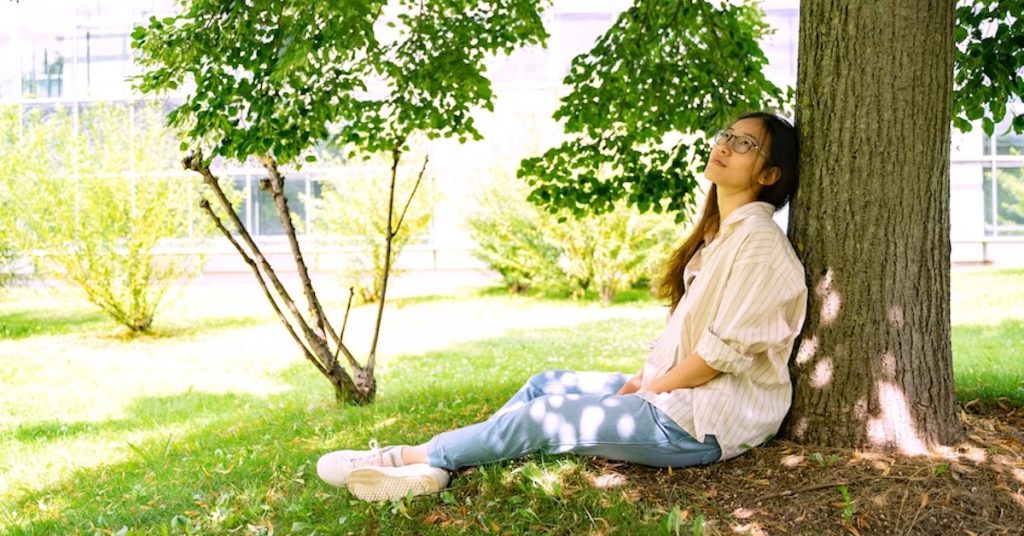
Nature therapy, or ecotherapy, is more than just a trendy concept. It’s a way of slowing down and realigning with something steadier than the rush of daily life. Personally, I’ve found that stepping into natural spaces—whether it’s a wooded trail, a quiet park, or simply the stretch of sky above—offers a kind of ease that’s hard to replicate indoors.
You don’t need to be an outdoorsy person to benefit. Nature therapy for stress isn’t about escaping into the wilderness; it’s about reconnecting with something simple and restorative. I often tell clients: start where you are. Even ten minutes under a tree, or a walk around the block where you notice the texture of the sidewalk, the sound of wind, or the color of early spring buds—these moments matter. Be present. Be curious. Be interested. Use all your senses to experience whatever you are immersing yourself in. Focus in and let the stress fall off your back. Notice that one leaf on the tree, that little bug navigating the blade of grass. Where is it going? What is its purpose? How does it smell, feel, sound where you are? What does that bird think of you stting under the tree?
There’s something quietly powerful about giving yourself permission to pause. To not be productive. To just be. Nature is an ideal setting for this because it doesn’t demand anything of us. It invites curiosity, presence, and stillness. And for those carrying stress, that invitation can be a lifeline.
We’ve seen how nature-based approaches to therapy can complement traditional talk therapy—especially for those who feel stuck, disconnected, or overwhelmed. Engaging the senses outdoors—touching bark, watching water move over stone, listening to birdsong—can gently regulate the nervous system and create space for new insights to emerge.
I often encourage what I call “wandering with intention”—not trying to get somewhere, but simply walking, sitting, or observing without a to-do list. You might find your breath slowing, your thoughts settling, or your body softening in a way it hasn’t in days. Nature has a way of offering what we need, even when we’re not sure what that is.
And while Mount Kisco and the surrounding areas have plenty of beautiful places to explore, nature therapy doesn’t have to happen in the perfect setting. It’s about relationship, not location. Find a place you can return to—a trail, a bench, a patch of grass—and let it become familiar. Over time, those small moments of connection become part of your internal landscape. A reminder that peace is still available, even when life feels unrelenting.
Here at Riverstone, we see therapy as a path, not a prescription. And nature, in all its quiet wisdom, can be a steady companion along the way. If stress has been weighing you down, maybe the next step isn’t figuring it all out—but simply stepping outside. Take a breath. Look around. Let yourself be met by the world as it is—imperfect, beautiful, and still moving forward.
Read more about the Human-Nature Connection here!